
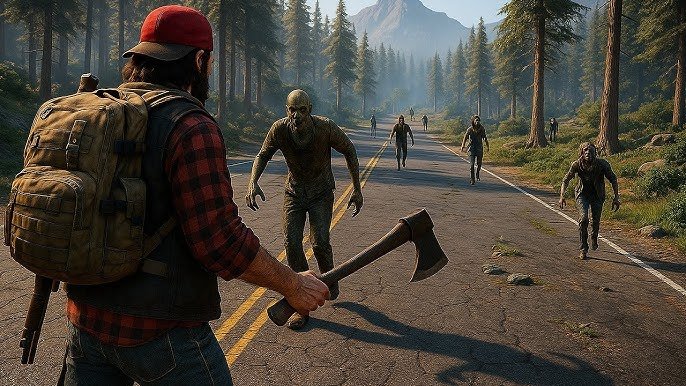
There is something uniquely satisfying about surviving in a world where every street corner, abandoned building, and dark forest path could hide danger. Zombie games are much more sophisticated than shooters. The best titles now are cross-pollinating all four of those aspects: exploration, crafting, storytelling, and also some useful survival mechanics to ensure players stay in the game for what feels like hours or even more. This transition is the reason why the best zombie survival games persist in compelling players to keep playing each year. Some cases emphasize the story with emotions, and some cases require you to survive in a game setting with scarce resources, as well as the constant danger lurking around you. Some even allow you to establish entire communities or create massive fortresses that can hold up to countless hordes. These games provide some of the best moments in games, for those that like open-world experiences, survival and tense game moments.
What Makes the Best Zombie Survival Games Worth Playing?
The Zombie genre has many experiences. Other players prefer the more realistic aspect of survival, requiring resource usage. Some others prefer fast action, gameplay with a team or character stories. A winning game is able to do balance some of these qualities without losing its playability.
Haven is clearly gone wrong by the end of this thing; much of the tension in a great zombie game is actually kept here through quiet, unflashy moments. When visiting an abandoned warehouse, it should feel dangerous to be in there. Finding supplies ought to be gratifying. Effective construction of the “safe base” should truly give children a feeling of achievement. It’s the balance between what could go wrong and what could go right that will make some of the best zombie games get remembered and some of the worst overlooked.
| Key Element | Why It Matters |
| Open-World Exploration | Encourages freedom and discovery |
| Survival Mechanics | Creates meaningful challenges |
| Base Building | Provides long-term progression |
| Storytelling | Builds emotional investment |
| Multiplayer Support | Adds replayability |
| Crafting Systems | Improves customization and strategy |
Best Zombie Survival Games for Storytelling, Survival, and Exploration
Open-world zombie games are still developing and new challenges are being introduced to the game all the time. Some are more narrative, but some are much more creative and free. These are the books on the list that produce welcome, outstanding experiences when it comes to survival.
1. Days Gone
Days Gone is a film that tells a great story, yet it also sports one of the most impressive horde mechanics that’s ever been put to use. In the game, the player can become Deacon St. John, a drifter who will have to make do in a bleak take on the Pacific Northwest. Weather changes, wild animals and surprising Freak activity infuse life into the world.
The game’s highlight is the large armies of baddies. Unlike classic zombie encounters, these packs can have hundreds of enemies in them, co-ordinated to be one threat. Careful planning, environmental traps and resource management are often required for playing to last. Meanwhile, there is a lot of emotional depth that most other survival games lack.
The motorcycle progression system enhances the immersion even further. Fuel management, upgrades, and maintenance become normal activities to survive. This makes exploration worthwhile and every trip is risky.
Best For: Story-driven survival and large-scale horde encounters
Average Playtime: 35+ Hours
2. 7 Days to Die
There are not many survival games that allow players the liberty that 7 Days to Die does. Players will have few resources and will need to look after themselves for setting up their feeding areas, making equipment, constructing barriers to protect themselves, and anticipating an increasingly greater scale of threat. All decisions involve long-term survival.
The Blood Moon event is still the highlight of the game. Every 7th night there are the forces of the Aggression attack your location. This mechanic creates constant pressure – to get it ready for survival is to get it right – it is preparation, meaning preparation, meaning, meaning. Even after the first couple of hours, a little shelter goes a long way! Subsequently, gamers are able to build complex forts that can withstand overwhelming attacks.
The crafting system is on par to be quite a nice one, too. Players can make weaponry, farming techniques, defensive structures, and advanced equipment. As a result, you feel the rewards of progression, after just a few hours, after a dozen hours even.
Best For: Base-building and hardcore survival
Average Playtime: 100+ Hours
3. Dying Light
Dying Light is the brainchild of Tomb Mapper, which evolved the zombie genre by introducing movement! Racing using a “parkour” style, players sprint across rooftops, climb buildings and use parkour to get out of danger rather than moving slowly through infected areas.
The balance between day-to-night games establishes continual tension. In the daylight hours, the infected enemies are sometimes under control. When dark falls, the stronger predators come out and turn the exploration game into a game of survival.
Combat also has satisfying elements as melee weapons are weighted and impactful. Players can create novel blades, weapons embellished with fire and other creative implements to create more dynamic gameplay situations.
Best For: Fast-paced action and movement-based gameplay
Average Playtime: 20+ Hours
4. State of Decay 2
The majority of zombie games are survival-inducing. The goal of State of Decay 2 is to rebuild society. Players will recruit survivors, build a community, collect resources and protect settlements from threats outside.
Permadeath provides a great amount of tension since each of the characters has a significant role. A loss of a seasoned survivor can have an effect on staff morale, productivity, and plans. So even their regular supply runs seem like something that matters.
The game also works well in the creation of emergent stories. A normal resource mission can become a desperate rescue mission very rapidly in the event that an unexpected danger occurs.
Best For: Community management and strategic survival
Average Playtime: 16+ Hours
5. Project Zomboid
The realism in Project Zomboid is taken to the extent of almost every other zombie game. Rather than the focus on action, players are being tested with respect to survival in order to maneuver care-wise and make wise use of resources.
The game not only records hunger, thirst, injuries, tiredness, stress, illness and many other factors, but also presents the player with the chance to donate recovered infantry and also equip them with shockproof armor or a shield. One blow-and it could be fatal. This makes the prospect of survival a true struggle instead of an inevitability. The sum and substance of the experience is the days’ memorable but brief, “This is how you died. Each subsequent pass through means another story and each upset represents a learning opportunity for playing again.
Best For: Realistic survival simulation
Average Playtime: 100+ Hours
6. Dead Rising
Whereas Dead Rising focuses on the survival of zombies, it takes a different approach to the concept. It doesn’t seek to capture reality but is based on creativity and chaos. The game is situated within a shopping mall and players are allowed to make use of nearly any sort of object, including weapons.
This design thinking generates innumerable moments in which the event will be remembered. A bench, a lawnmower, a shopping cart or a piece of sports equipment can suddenly become a strong tool for surviving. Out of the result, an experience of sandbox situated up to the show of inventiveness and humor.
Best For: Creative combat and open-ended gameplay
Average Playtime: 12–20 Hours
7. Dying Light 2 Stay Human
Dying Light 2 builds upon just about all of the mechanics of the original game. The city becomes larger, the means of locomotion become more varied and the decisions or events made by players have a significant effect on aspects of the world.
Parkour is king. Paragliders, advanced motion skills and grasping hooks make exploration an exciting experience. Each rooftop is like a part of a larger navigating puzzle.
Best For: Exploration and player-driven choices
Average Playtime: 25–80+ Hours
8. Unturned
Despite its simple visuals, Unturned offers impressive depth. Players control resources, create structures, make equipment for themselves and fend for themselves against zombie hordes and other survivors. It has a thriving modding community, which helps make it more replayable. Over the years since its release, there have been new maps, custom servers and even new modes to appeal to new players.
Best For: Free survival gameplay and community content
Average Playtime: 50+ Hours
Unturned
Its accessibility makes it an excellent starting point for players new to survival games.
9. Dead Island
Dead Island combines role-playing progression with satisfying melee combat. The tropical setting creates a striking contrast between beautiful scenery and violent outbreaks.
Character progression, weapon upgrades, and cooperative gameplay work together to create a rewarding experience. Playing alongside friends often enhances the game’s strongest features.
Best For: Cooperative action and melee combat
Average Playtime: 18+ Hours
10. Dead Rising 3
Dead Rising 3 is basically exactly what made prior games cool and supplies it on a significantly larger scale. Players get more freedom to roam, fight and survive in the game in the vast city of Los Perdidos. One of its biggest features is the vehicle crafting system, where one can mix different vehicles into zombie-killing guns.
The open world is quite frenetic and perilous and there are thousands of zombies crawling around the city. Concurrently, the game retains the classic gameplay elements of the series: action, humor, and over-the-top combat, with each mission being just as fun.
Best For: Massive-scale sandbox action and vehicle combat
Average Playtime: 14–45+ Hours
11. World War Z
World War Z is a fast-paced co-op game featuring massive zombie hordes. As opposed to many other survival-type games, it is a game based on teamwork, decision-making at a split second, and action. A particularly important feature is its swarm technology, enabling hundreds of zombies to jump over others in seconds and fill up an entire area.
Each mission is charged with its dangers – with players needing to be coordinated, resource-managed, and player-protected in the face of the overwhelming numbers. There is also a ton of variety for characters, upgrade paths, etc, which can be a huge reason for co-opist re-play.
Best For: Team-based horde combat and cooperative shooting
Average Playtime: 7+ Hours
12. How to Survive 2
How to Survive 2 allows for a funnier look at the survival of all things zombies, but still provides meaningful crafting and progression systems. The game immerses the players into a post-apocalyptic world where collecting resources, constructing shelters and building tools are crucial to survival. It is isometric, so there’s no getting lost, and the crafting system makes it intriguing enough to keep people involved.
One of its flagship features cooperative play, allows friends to collaborate to take charge and fulfill missions together. The game is easy to comprehend and hard to complete, which makes it fun for beginners and the pros alike.
Best For: Casual survival, crafting, and cooperative gameplay
Average Playtime: 27+ Hours
13. Dead Island: Riptide
Dead Island: Riptide continues the story and gameplay style introduced in the original Dead Island. Once more, players are stuck in the tropical hotspot and surrounded by infected enemies. The game adds places, powerful enemies, and new defense gameplay elements.
Ultimately, the main appeal of the game would revolve around melee, with players building their weapons so as to engage opponents at a personal level. The setting of the island is a bit of a contrast between beauty and danger, thus making it one of uniqueness in many zombie-creatures.
Best For: Co-op island survival and melee combat
Average Playtime: 12+ Hours
14. Dead State
Dead State approaches zombie survival from a strategic perspective rather than focusing on action. Players manage a shelter filled with survivors while making important decisions regarding resources, security, and community morale. Combat takes place through a turn-based system that rewards careful planning instead of quick reflexes.
Every decision can affect the survival of the entire group, which adds genuine tension throughout the campaign. The game also places significant emphasis on relationships between survivors, creating meaningful choices beyond simple resource management.
Best For: Strategic survival and shelter management
Average Playtime: 40+ Hours
15. Dead Rising 2
Dead Rising 2 has succeeded in continuing Dark Souls 1’s story without falling into those typical pitfalls while also adding in one of the series’ best innovations: crafting weapons. Players can use normal items to construct some senseless yet formidable zombie-killing implements, which provide no shortage of cabin comedies.
The gamete ambiance creates a distinctive atmosphere, ripe with opportunities for exploration and experimentation. Players can team up and operate cooperatively to complete missions and fend off hordes of zombies, making the game even more thrilling. The subtle mix of humor, action, and creativity ensures the game’s enduring impact over the years.
Best For: Weapon crafting, co-op action, and sandbox combat
Average Playtime: 14+ Hours
Everything You Need to Know Before Playing an Open-World Zombie Game
The popularity of open-world survival titles continues to grow because they offer freedom that linear games often cannot match. In-game goals are set by the player, the progression is at their own speed, and each player is asked to formulate their own survival plan.
It’s in this freedom that you go about different games and target different groups of people. If you can estimate the main heads, you can choose a better title according to your own tastes.
Types of Open-World Zombie Games
There are typically a variety of different types of zombie survival games. The differences from one to the other highlight various mechanics and cater to different player types.
| Category | Recommended Games | Main Focus |
| Survival Simulation | Project Zomboid | Realism |
| Story-Driven Survival | Days Gone | Narrative |
| Action Survival | Dying Light | Combat |
| Community Building | State of Decay 2 | Management |
| Crafting Sandbox | 7 Days to Die | Construction |
This is because realism players tend to be those who prefer simulation. Others, who are more action-oriented, meanwhile, opt for active games commonly featuring faster action combat.
What to Look for in an Open-World Zombie Game
If you know the qualities of games that are important to you, then you’ll be better able to select the right game. There’s a preference for either having a system of assiduous crafting or a storyline or multiplayer appeal. Most progression systems work better when they are strong, which leads to better longterm engagement. A dynamic environment also helps to sustain interest as exploration continues to give a reward. Most significantly, cooperative features can drastically enhance replayability. If you are comparing to other options, then look at how much weight each game gives to: The survival mechanic, exploration, combat, and character progression.
Choosing the Right Open-World Zombie Game for Your Play Style
Players seeking emotional narratives should strongly consider Days Gone. Those who enjoy realistic survival mechanics will likely appreciate Project Zomboid. Fans of creative construction and base defense usually find 7 Days to Die particularly rewarding.
For example, many groups of friends continue returning to 7 Days to Die because preparing for Blood Moon attacks creates memorable teamwork moments. At the same time, solo players often prefer story-driven adventures where character development takes center stage. Understanding your preferred style ultimately makes it easier to choose the right experience.
Common Features Found in the Best Zombie Survival Games
Most successful zombie games share a few important features. These systems help create tension, progression, and replayability.
- Resource gathering and scavenging
- Character progression
- Crafting and equipment upgrades
- Exploration-based gameplay
- Dynamic enemy encounters
- Long-term survival objectives
Conclusion
The best zombie survival games provide a lot more than non-stop zombie fights. They push players out into worldly dangers, force them to allocate resources, call for critical decisions, and adjust to the ever-evolving nature of their environments. There are several games in this genre, which offer different storylines and aesthetics, such as cinematic Days Gone, realistic Project Zomboid, and creative 7 Days to Die.
Ultimately, the right decision will be made based on your playing style. Whereas if you relish action and movement, you’ll discover that Dying Light is perfect for you. For hardcore survival and also long-term progression, there are Project Zomboid and 7 Days to Die. However, those who are interested in the cooperative experience still have hundreds of hours of fun to enjoy in titles like World War Z and State of Decay 2. No matter which one you select, all the games in this bibliography feature their own approach to how one can endure the apocalypse.
